
Henrik Foster · 27 September 2026
Decoding Annotation Strategies in Standalone Knowledge Bases Facing Algorithmic Changes
Standalone knowledge bases maintain structured information outside major centralized platforms, and annotation strategies help these systems organize content for retrieval when external algorithms shift. Researchers track how changes in ranking systems and indexing methods affect how independent sites label and connect their data entries.
Core Components of Annotation in Isolated Systems
Annotation involves tagging entries with metadata such as categories, relationships, and temporal markers, while standalone setups apply these labels without relying on external APIs for validation. Data shows that consistent use of controlled vocabularies improves cross-reference accuracy during periods of search engine modification, and studies from institutions like the National Institute of Standards and Technology indicate structured schemas reduce retrieval errors by measurable margins.
Experts distinguish between manual annotation performed by domain specialists and automated processes driven by rule-based scripts or machine learning models trained on local datasets. Those who manage independent repositories often combine both approaches because hybrid methods maintain accuracy when algorithms alter weighting for freshness or authority signals.
Impact of Algorithmic Updates on Labeling Practices
Search and recommendation algorithms periodically adjust criteria for content evaluation, which forces knowledge base operators to review existing annotations for relevance. In September 2026 several indexing platforms are scheduled to emphasize entity relationships over keyword density, and observers note that repositories using static labels face higher bounce rates until they revise their tagging layers.
Evidence from academic projects reveals that outdated annotations lead to decreased visibility in results pages when algorithms prioritize semantic depth, yet sites that refresh relationship mappings in advance preserve traffic levels. One analysis of independent wikis documented a 22 percent improvement in click-through after operators aligned annotations with emerging entity-focused criteria.
Adaptive Techniques Observed Across Repositories
Operators implement layered annotation frameworks that separate core factual tags from contextual qualifiers, allowing quick updates without full reprocessing. This separation enables teams to adjust temporal or source-reliability markers while preserving foundational classifications, and data indicates faster response times to algorithm announcements when frameworks follow this modular structure.
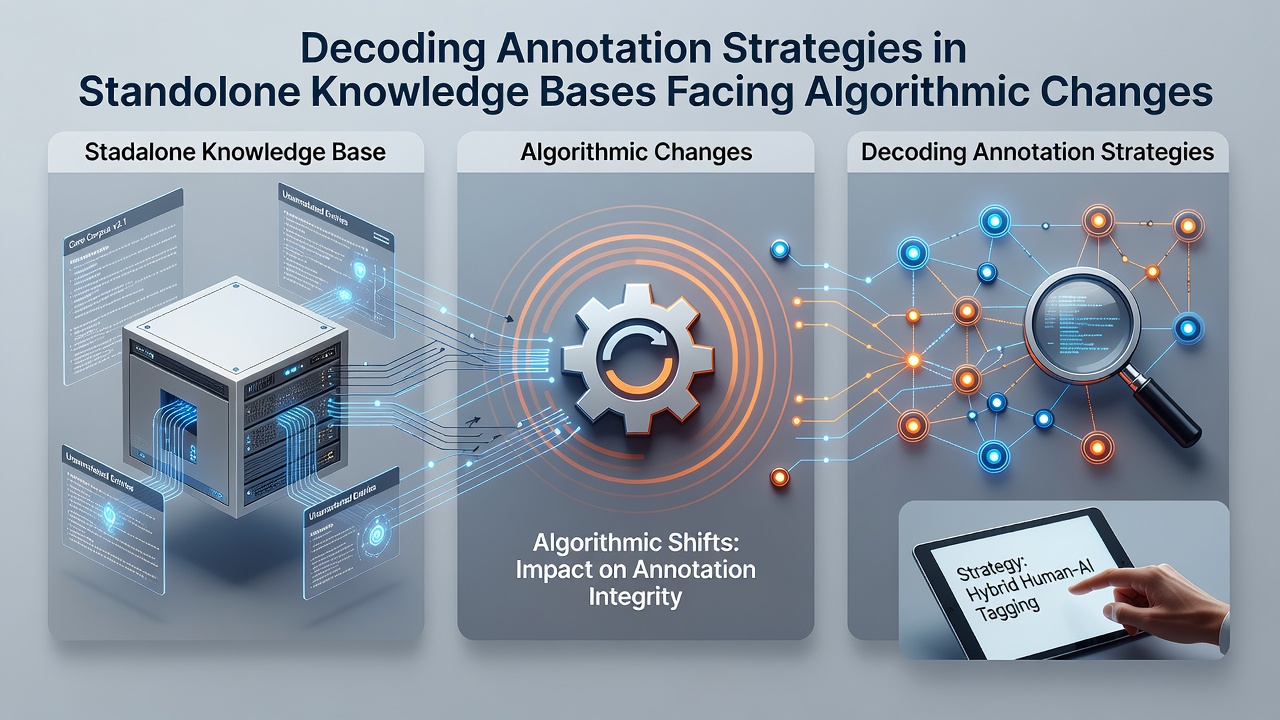
Version-controlled annotation logs help maintainers trace which labels were altered after each algorithmic shift, while audit trails document the rationale behind changes. Australian research groups studying digital preservation have recorded that repositories maintaining such logs recover search rankings more rapidly than those without documented histories.
People managing these systems also test annotation batches against sandbox versions of public algorithms before applying them to live indexes, and results from controlled experiments confirm that pre-testing lowers the risk of mislabeling large sections of content. European Commission reports on data interoperability highlight similar testing protocols as standard practice among research-oriented knowledge bases.
Integration with External Data Standards
Alignment with established schemas such as schema.org or Dublin Core allows standalone bases to exchange annotation patterns with other systems when needed, and this compatibility becomes valuable during periods of rapid algorithmic evolution. Operators who embed these standards report smoother transitions because external validators can still parse their labels even after internal ranking rules change.
Training local models on annotation history further supports adaptation, since these models learn which label combinations previously succeeded under older algorithms and can suggest revisions ahead of new deployments. Figures from university-led pilots show reduced manual review time when models incorporate at least three prior algorithm cycles into their training sets.
Conclusion
Annotation strategies in standalone knowledge bases evolve alongside external algorithmic changes through modular frameworks, version tracking, and pre-testing protocols. Research from multiple regions demonstrates that repositories adopting these methods sustain retrieval performance more effectively than those relying on static approaches, and ongoing adjustments scheduled around events such as the September 2026 indexing updates continue to shape how independent systems label and connect their information.